Entrepreneurial self-confidence
Unconvinced that his future lay with the Japanese-owned distributor of engineering components he was working for, James Devereux was interested to hear about a new competitor based in South Korea. What he did next certainly demonstrated entrepreneurial self-confidence.
“I thought I could do a better job than the £5billion corporation which employed me,” he explains, “so I bought a ticket to fly to the city of Incheon and sat in a room with five chain smoking Koreans to bash out an agreement to be their UK agency.
“I sold my car to buy stock and focused on the PO and SO postcode areas where I had customers from my previous employment. But as it turned out, my first big sale was to Nissan in Sunderland.” He decided that he needed to produce a big catalogue like his competitors, so he learnt about desk-top publishing and produced 5000 copies which he “randomly” sent out. “Although I was selling commodity products, my USP was that they were like-for-like with the market leader but at a better price,” says Devereux. That said, he recognised his business wouldn’t last much beyond the fledgling stage if he just followed that mantra. “I could see that it was only a matter of time before it was going to be a quick race to the bottom,” he recalls, “because I knew the Japanese would work out what to do, which would be to sell at a loss if needs be because they knew I couldn’t afford to.”
In the meantime, a US company had got in touch and asked if Devereux if his company, now called PSI Technologies, would distribute their products in the UK. That was in 2002 and resulted in a fourfold increase in turnover. “But our margin was still managed by the manufacturer, and that margin was soon going to be eroded because of competitive pressures,” he says.
His first real breakthrough came as a consequence of the battle between the pioneer satellite television broadcasters, similar to the way Betamax and VHS played out in the early days of video. PSI Technologies got the contract to provide key components for BSkyB equipment. But Devereux saw the need to do more.
“I’ve always been interested in new ideas, so I started to look at areas where technology was having an impact and to see if I could innovate in that space,” he explains. “Back in the day I used to play a few games of paintball, and I got to thinking that by using some of our components, the paintball gun could be made to fire more quickly. So, I contacted the manufacturer whose product had plateaued at twelve balls a second, and we worked together on the improvements I suggested. We got the rate up to fifty a second.
“Up to that point we were a widget distributor, but that ‘interesting moment’ made me realise that if you have an idea and bring people together to work collaboratively, you have a better chance of achieving something more.”
What happened is that the company pivoted from simply selling commodities to conceptual sales, offering the customer the prospect of having something developed which would give them a competitive edge rather than deploying a ready-boxed existing product.
What Devereux did next was to identify and then dial into need. Such as introducing the technology behind the paintball gun concept into motorsport. “We just got in touch with the teams at Le Mans and Nascar and demonstrated that we could apply the technology to enable their drivers to change gear more quickly,” he explains.
Astonishingly though, coming up with a concept and seeing it through wasn’t going to provide sufficient PSI Technologies with sufficient differentiation. Indeed, the concept sale was already in play by multinationals. Worse, they weren’t charging for the engineering design input because they would make their money from securing the resulting order for the components.
“We weren’t big enough to change that gameplan,” says Devereux, “so we had to find an edge.” A necessity. “If the concept doesn’t work out, we aren’t paid for all the hours we put in,” he explains. “All of that work for us is pure risk. We move forward with a concept four times out of ten, and what sets us apart from much larger competitors with greater resources is that we are more agile, and that is reflected in the timeframe for the deliverables.
“The multinational wheel turns slowly because the organisation is so big and the procedures they have in place when they have to start from a blank sheet of paper can take a long time to negotiate. They have great engineers producing great products, but they just can’t respond as quickly. We don’t have to refer to a higher authority for permissions, but that mechanism is the glue which keeps larger organisations intact.”
And he provides a couple of examples of concept work which demonstrate speed of response - and the scale of the risk. “From receiving an enquiry, we dispatched twenty-five different components which were on the customer’s desk in two hours,” says Devereux. “They were able to test them overnight, and the next day we were told we were engaged. Agility is not just being able to make a decision quickly but implementing it.”
The company designed a door management system for railway carriages with thirty data points on each door to enable a train operator to see online, as it were, whether there are any issues. It’s been fitted to 604 doors, across all of the rolling stock in the UK there is the potential to install 27,000 more. But to make the initial sale, after pitching the concept, PSI Technology had to risk £250,000 of their own money to bring it to fruition.
Because of their specialist knowledge in air valves, the company found itself part of the four main teams set up in response to the government’s challenge to build ventilators in the face of the Covid-19 pandemic. “Another reason why we got pinned to the forefront is because we were able to react without having to refer it through layers of management to say yes,” Devereux adds. “For five weeks during lockdown I lived in the office. Over that period, we spent £125,000 just on courier services for the next day delivery of components – all on letters of intent, because our components had to be produced straight away, without delay, to energise the supply chain.
“Yes it was tremendously exciting - we were working with 1000 engineers at Dyson for example - as well as stressful, but with the motivation of doing something for the national good. Originally the government thought it needed 30,000 more ventilators but then revised that number to 10,000 and ended up deciding its existing suppliers could provide them. As you know, Dyson pulled the plug, and at the time we hadn’t received a penny. It was another a nervy three weeks but they paid up. “What I have learnt very quickly is the need to make friends with stress. Recognise it’s always going to be there so bring it on board and make it empowering, driving you forward rather than dragging you down.”
The cancellation of the project wasn’t the only big disappointment Devereux has experienced. Previously, PSI Technologies had developed a hydrogen fuel cell for a customer who placed an order for five million on the Friday - and then cancelled it immediately after the weekend.
Interestingly, Devereux started his company in the same year (1998) that his identical twin brother set up his online insurance business, which he went on to sell for “millions.” “We supported each other from the outset, but there was also some sibling rivalry,” Devereux smiles. “We were neck-and-neck for the first five years so my motivation at that time included chasing the dollar. Anyone who starts a business and says they’re are not being 100% truthful. It’s only when you start feeling more financially secure that you realise making money isn’t really the motivation.
“For now, motivation comes from the internet of things and remote condition monitoring. We’re producing sensors which have a battery life of three years and can provide information direct to your smartphone straight away - and that prompted me to turn the company on a dime so that in addition to doing the stuff that pays the bills and the wages for our twenty-five staff, our focus is on developing new concepts in those areas.”
To take the company forwards, ten years ago Devereux brought on board operations director Stephen Bennett, who was latterly managing director of a competitor. “He was a great find, and it has given me more time to get my hands dirty,” he laughs.
“I’ve come to realise that the biggest mistake you can make, and to think I used to wear it as a badge of honour, is to continue to believe that you can carry on doing everything yourself and rely on self-funding in order to grow the business. I’m not equity precious and I have never been shy of putting my assets on the line for the business.
“We had a third spoke in our management /shareholder wheel, a solutions architect I had known for years who joined us from CapGemini. But after twelve months or so and having helped us to move the needle in the right direction, he said he was going to leave to try his hand at something else. You can’t imagine the impact that can have on a business of our size. When a director / shareholder quits a small firm, its credit rating is immediately affected regardless of the reason for the departure.”
Devereux is wary of the growing influence of business coaches and mentors. “There are plenty of advisors who can apply textbook methodology, but they need to have trod the boards themselves to be of value to an SME,” he maintains. “Then there are those who have sold their company and assume that as a consequence they can simply parachute themselves into another business and make a success of it.”
Not that Devereux, who celebrated his 50th birthday in October 2020, has any intention of leaving the stage just yet. “I recognised that after becoming a business owner I was then unemployable,” he muses. “I couldn’t have been absorbed in corporate culture because I wouldn’t have been able to keep my mouth shut. People I’ve kept in touch with from the original company I worked for can’t wait to retire. An exit sign won’t appear on my roadmap until I stop enjoying what I am doing.”
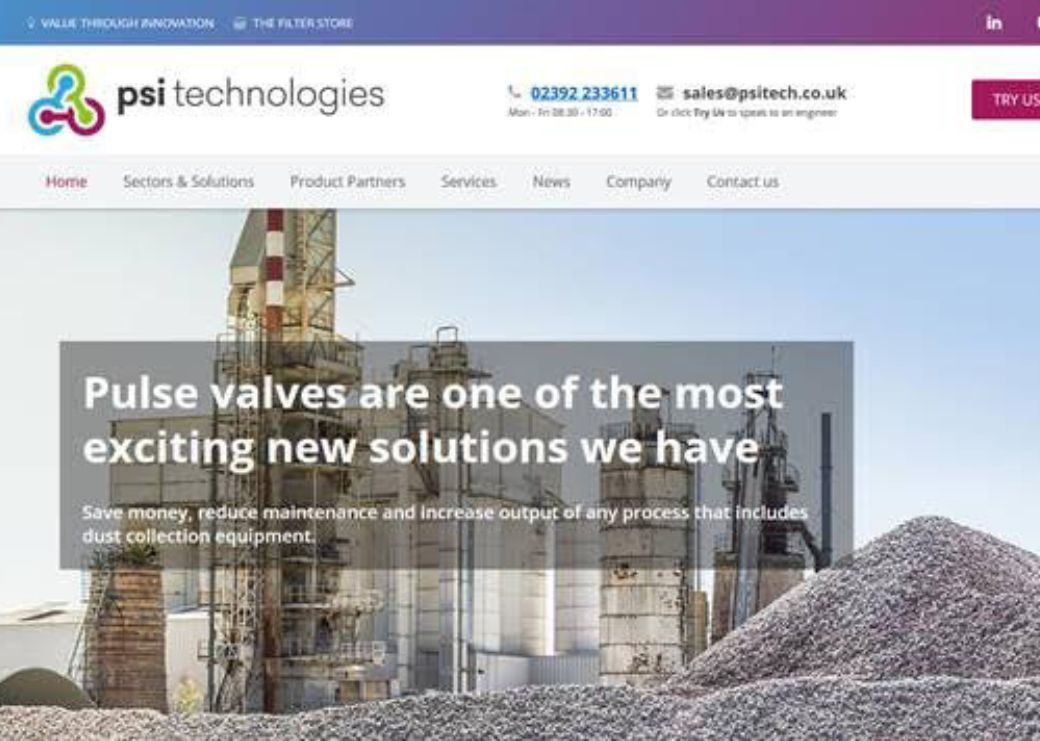
That much is apparent in a simple expression of joy which you wouldn’t expect to see at the end of a company’s statement of intent emblazoned across the home page of its website. It reads: ‘PSI Technologies is an innovation led, engineering solution provider. We work in collaboration with our customers to innovate, resolve technical challenges and enhance opportunities with a goal to bring tangible benefit to their business. We love what we do!’.